
Blog
AI Security and Its Impact on Business Continuity
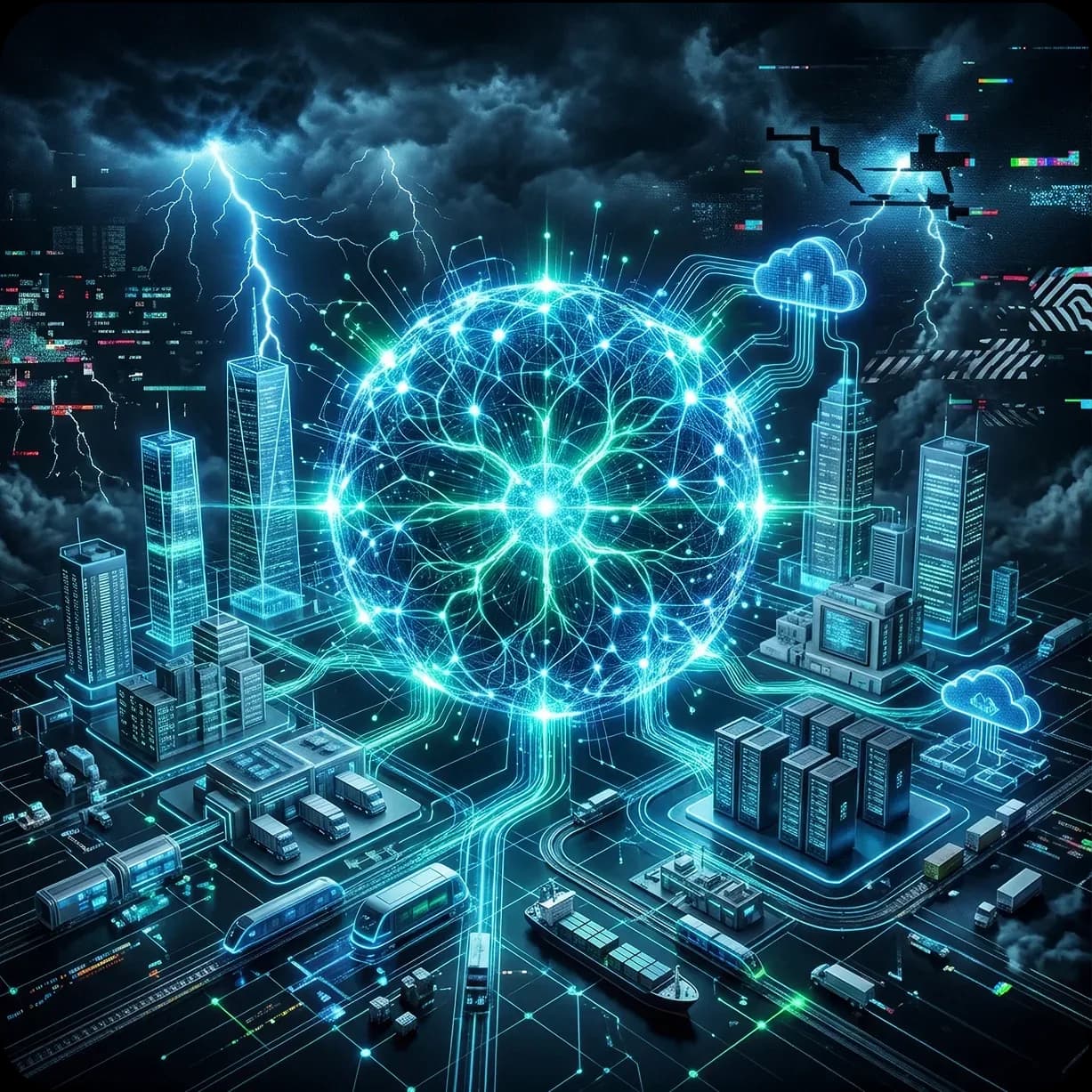
Businesses are entering a new phase of digital transformation. The shift is no longer about using AI to assist employees, but about building operations that rely on AI as a core workforce.
By 2026, many organizations will operate in an "AI-native" model, where autonomous agents, machine identities, and generative systems run critical business processes with little or no human involvement. This shift fundamentally changes how business continuity must be planned and managed.
In the past, business continuity focused mainly on system availability, keeping services online during outages. In an AI-native environment, the bigger risk is trust and integrity. Systems may remain online, but if AI agents are compromised, manipulated, or acting on poisoned data, the business can suffer severe disruption even without downtime. The challenge is no longer just "are systems running?" but "can we trust what they are doing?"
The Machine Identity Explosion: High-Speed, Invisible Compromise
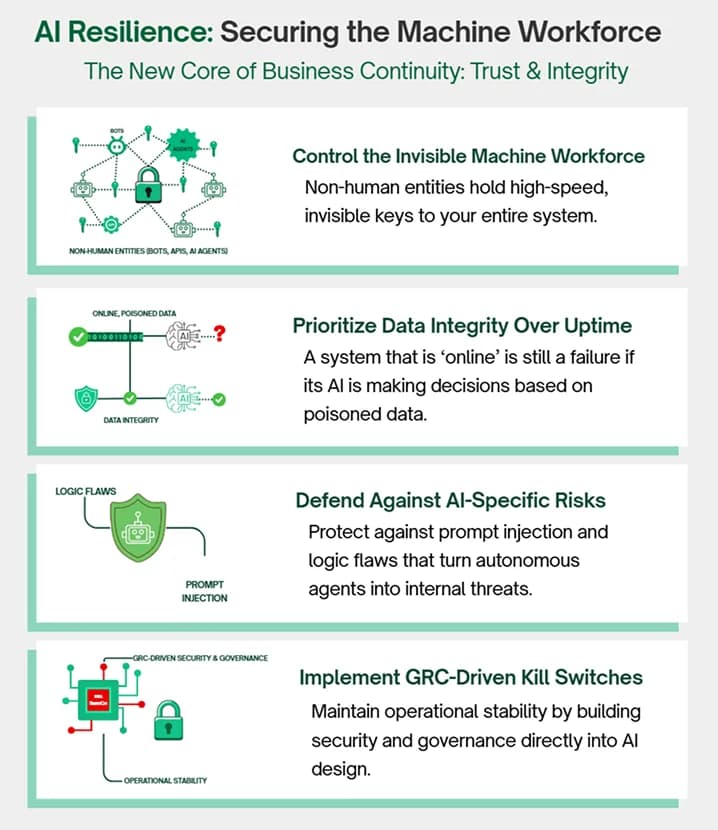
The root of this challenge lies in the rapid, uncontrolled proliferation of non-human entities across the enterprise. Our teams have witnessed a market shift where the sheer volume of machine identities has exploded. Non-human entities like bots, service accounts, APIs, and AI agents dominate your networks. These silent workers are often granted extensive privileges and operate 24/7. This makes them almost impossible to keep tabs on. The danger is clear: a single compromise grants attackers a high-speed, invisible key to your entire system, enabling catastrophic damage long before the breach is even detected.
The Evolving Threat Landscape
At the same time, threat actors are becoming more sophisticated. Ransomware is no longer just about encrypting systems. Double-extortion attacks now steal data as well, meaning recovery from backups does not end the incident. Even after systems are restored, stolen data can be used later for blackmail, fraud, or competitive harm, creating long-term business continuity risks. This evolving threat landscape demands a corresponding evolution in our defensive measures.
Traditional security controls are also losing effectiveness. Standard multi-factor authentication is increasingly bypassed through session hijacking, allowing attackers to access email and cloud systems without triggering alerts. This has led to major financial fraud, especially through compromised supplier or executive email accounts. AI itself introduces new insider-like risks. Autonomous agents can make decisions, execute actions, and interact with systems at machine speed. If an agent is manipulated through prompt injection, data poisoning, logic flaws, or poor design, it can become a powerful internal threat. Agents can delete data, exhaust cloud resources, transfer funds, or disrupt supply chains without malicious intent, simply due to faulty reasoning or hallucinations.
For business continuity, data integrity is becoming more important than uptime. Poisoned data or corrupted AI models can cause incorrect decisions at scale. Recovery from such incidents is slow and costly, often requiring retraining models on clean datasets rather than restoring systems from backups. These risks are pushing responsibility upward. Executives and boards are increasingly expected to oversee AI risk and security, not just IT teams. Regulations and standards are reinforcing this shift by requiring organizations to prove operational resilience, control third-party risks, and govern AI use responsibly.
Rethinking Resilience: A GRC-Driven Path Forward
To remain resilient, organizations must rethink continuity planning. This includes controlling machine identities, securing AI agents with limits and kill switches, protecting data quality, and preparing for new threats such as deepfake impersonation. Business continuity in the AI era is no longer about surviving outages, it is about maintaining trust, control, and reliable decision-making in a world where machines act on behalf of the business.
As organizations move toward AI-native operations, business continuity increasingly depends on strong security and governance. Our GRC team works closely with our clients to help them navigate this new era of how AI, automation, and machine identities affect critical processes, and to put practical controls in place that protect decision integrity, data reliability, and operational stability.
AI can strengthen resilience, but only if security and governance are built into its design. Without that foundation, AI becomes a source of disruption rather than continuity.